Smart Home Electrical Upgrades Worth Every Penny in 2026
The "smart home" concept has matured significantly over the past few years. What used to be a collection of gimmicky gadgets has become genuinely useful technology that improves convenience, safety, and energy efficiency. But not every smart home upgrade is worth the investment — and many require professional electrical work that isn't a DIY project.
Here are the smart home electrical upgrades that are actually worth it for Winston-Salem homeowners in 2026, ranked by value and practicality.
1. Smart Switches vs Smart Bulbs: Which Is Right for You?
This is the most common question homeowners ask about smart lighting. The answer depends on your goals.
Smart Bulbs (Philips Hue, Wyze, Sengled)
How they work: Replace your existing bulbs with WiFi- or Zigbee-connected LED bulbs. Control brightness, color, and scheduling from an app or voice assistant.
Best for: Renter-friendly setups, rooms where you want color-changing lights, and situations where you don't want to modify the electrical wiring.
Downsides: The wall switch must stay ON at all times — if someone flips the switch off, your smart bulb becomes a regular bulb until you turn it back on. This drives families crazy. Also, smart bulbs cost $15–$50 each, making whole-home setups expensive.
Smart Switches (Lutron Caséta, Leviton Decora Smart, TP-Link)
How they work: Replace your existing light switch with a smart switch that controls whatever bulbs you have (regular LEDs work fine). Control from an app, voice assistant, or the physical switch — the switch always works, even if WiFi is down.
Best for: Whole-home smart lighting. Smart switches solve the "someone turned off the switch" problem permanently. They cost $40–$80 per switch (installed), but they control your existing bulbs — no need to buy expensive smart bulbs for every fixture.
Downsides: Requires electrical wiring work. Most smart switches need a neutral wire, which homes built before 1985 may not have at every switch location. A licensed electrician can add neutral wires where needed, or you can use no-neutral smart switches (Lutron Caséta works without a neutral).
Our recommendation: For whole-home smart lighting, smart switches are the better investment. For a single accent fixture where you want color-changing lights, a smart bulb makes more sense. Dausman Electric installs Lutron Caséta and Leviton smart switches throughout Winston-Salem.
2. USB-C Outlet Upgrades: The Modern Home's Must-Have
USB-C outlets are one of the simplest and most practical electrical upgrades you can make. Instead of hunting for a charging brick every time you need to charge your phone, tablet, or laptop, the outlet itself has built-in USB-C (and often USB-A) ports.
Why USB-C specifically in 2026: USB-C has become the universal charging standard. The EU has mandated USB-C for all small electronics, and Apple has transitioned iPhone to USB-C. Most modern laptops, tablets, and phones charge via USB-C. An outlet with USB-C ports can deliver up to 30 watts of power — enough to fast-charge a phone or power a laptop.
Cost: $50–$100 per outlet installed (including the outlet hardware).
Best locations: Kitchen counters, nightstands, home offices, living room charging stations, and entryway tables.
Brands we recommend: Leviton (reliable, widely available), TopGreener (more ports, higher amperage), and Eaton (premium build quality).
This is a quick, affordable upgrade that genuinely improves daily life. Most homeowners who install one USB-C outlet end up requesting them throughout the house.
3. Smart Thermostat Wiring Requirements
Smart thermostats (Nest, Ecobee, Honeywell Home) are one of the most popular smart home upgrades — and one of the most common sources of electrical frustration. The issue: smart thermostats need a "C wire" (common wire) to provide continuous power to the thermostat's WiFi radio and display.
The C Wire Problem
Many Winston-Salem homes built before 2010 have thermostat wiring without a C wire — older thermostats didn't need continuous power because they ran on batteries or drew power from the heating circuit. Smart thermostats need that C wire, and without it, they experience intermittent WiFi drops, rapid battery drain, or won't power on at all.
Solutions
Run a new C wire: The best solution. Dausman Electric can run a new 5-conductor wire from your HVAC equipment to your thermostat location. Cost: $150–$400 depending on accessibility.
Use a C wire adapter (Power Extender Kit): Ecobee includes one; Nest sells one separately. These adapters create a C wire equivalent using existing wiring. They work but can be less reliable than a dedicated C wire.
Use a thermostat that doesn't require a C wire: Some Google Nest models can work without a C wire by drawing power from the heating circuit — but this can cause issues with some HVAC systems and isn't recommended for homes with heat pumps.
Our recommendation: If you're installing a smart thermostat and your home doesn't have a C wire, have Dausman Electric run one. It's the most reliable long-term solution and costs less than you might expect.
4. Whole-Home Surge Protection in the Smart Home Era
If you're investing in smart home technology — smart switches, smart thermostats, smart appliances, EV chargers — you need whole-home surge protection more than ever.
Smart home devices contain sensitive electronics that are vulnerable to voltage spikes. A single lightning strike near your home, a utility switching event, or even a large appliance cycling on can send a surge through your electrical system that fries every smart device connected to it.
Power strip surge protectors don't protect hardwired devices. Your smart switches, smart thermostat, EV charger, HVAC system, refrigerator, and oven are all hardwired — power strips can't help them. A whole-home surge protective device (SPD) installed at your electrical panel protects every device in your home simultaneously.
Cost: $250–$650 total (equipment + installation)
Protection: 40,000+ amps, covers every circuit in the home
Installation time: 1–2 hours
Compare $250–$650 to the cost of replacing a smart thermostat ($250), smart switches ($400+ for a whole home), refrigerator control board ($300–$600), HVAC control board ($500–$1,200), or EV charger ($200–$800). The math is obvious.
Dausman Electric installs Leviton, Siemens, Square D, and Eaton whole-home surge protectors throughout Winston-Salem. We can add one during any other electrical service call.
5. What an Electrician Needs to Do vs What You Can DIY Safely
DIY-Safe Smart Home Projects
- Installing smart bulbs: Just screw them in (after turning off the switch). No electrical work.
- Setting up smart plugs: Plug into an existing outlet. No electrical work.
- Installing a smart doorbell (battery-powered models): No wiring required for battery models like the Ring Battery Doorbell.
- Programming and configuring smart devices: App setup, automations, and voice assistant integration are all software-based.
Projects That Require a Licensed Electrician
- Installing smart switches: Involves removing and replacing electrical switches, connecting line/load/ground wires. Requires a permit in many NC jurisdictions.
- Installing USB-C outlets: Replacing standard outlets with USB-C outlets involves electrical work. Code-compliant installation requires proper wire connections and torque.
- Running thermostat C wire: Involves fishing wire through walls and connecting to HVAC equipment.
- Whole-home surge protection: Installed at the electrical panel. Requires working with live electrical components.
- EV charger installation: Dedicated 240V circuit, 40–60 amps. Requires permit and inspection.
- Smart doorbell (hardwired): Connecting to existing doorbell transformer wiring. Requires proper voltage verification.
The general rule: if it involves touching electrical wires, you need a licensed electrician. If it plugs into an existing outlet or operates on battery, you can usually do it yourself.
Bundle Smart Home Upgrades for Maximum Value
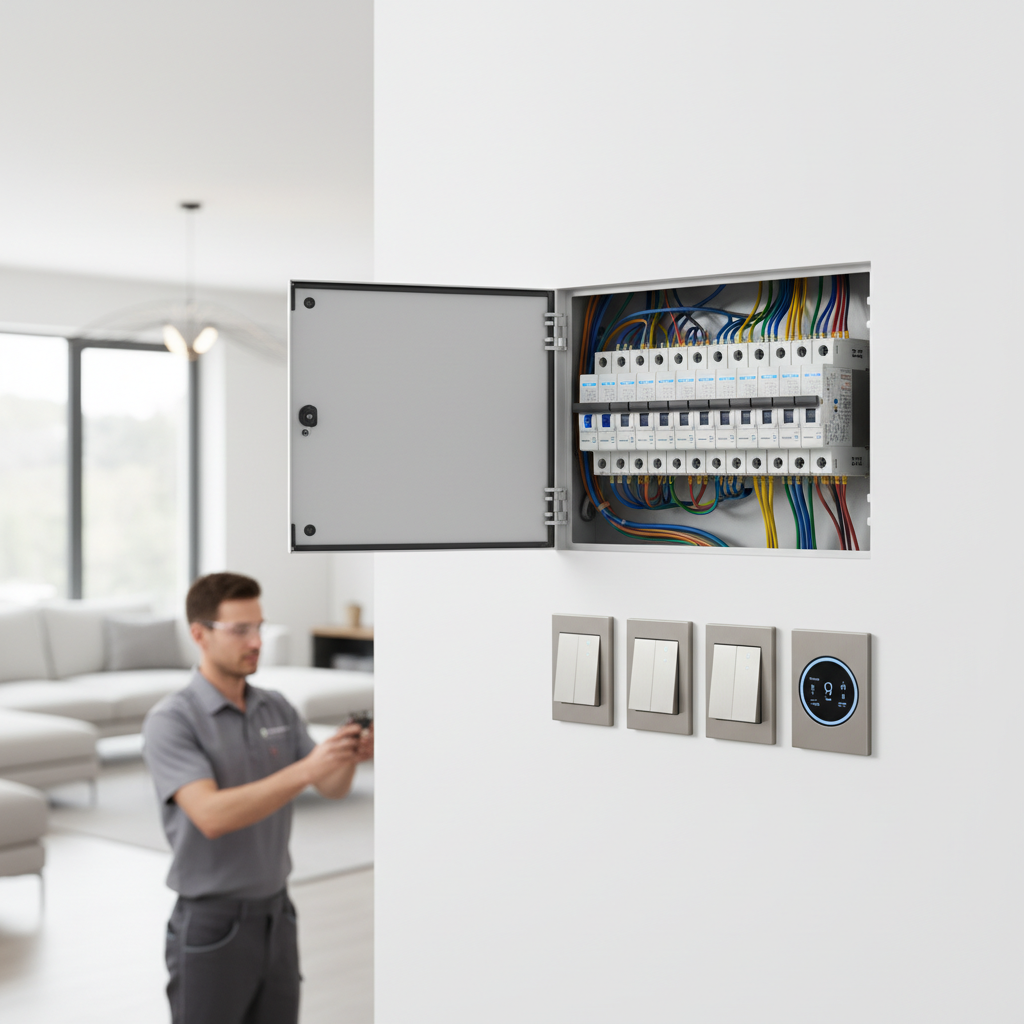
If you're planning multiple smart home upgrades, have them done together. Dausman Electric can install smart switches, USB-C outlets, a C wire for your smart thermostat, and whole-home surge protection in a single visit — saving you money on the service call and coordination compared to scheduling each project separately.
Schedule Your Smart Home Electrical Consultation
Dausman Electric helps Winston-Salem homeowners integrate smart home technology safely and correctly. We install smart switches, USB-C outlets, thermostat wiring, whole-home surge protection, and EV chargers throughout Forsyth County and the Triad.
We offer free consultations for new customers. We'll assess your current electrical system, discuss your smart home goals, and provide a written estimate for the work.
📞 Call (336) 978-7844
🌐 Schedule online
See also: Whole-Home Surge Protection Guide | Panel Upgrade Guide | All Electrical Services