What Is an Electrical Panel Upgrade — and When Do You Need One?
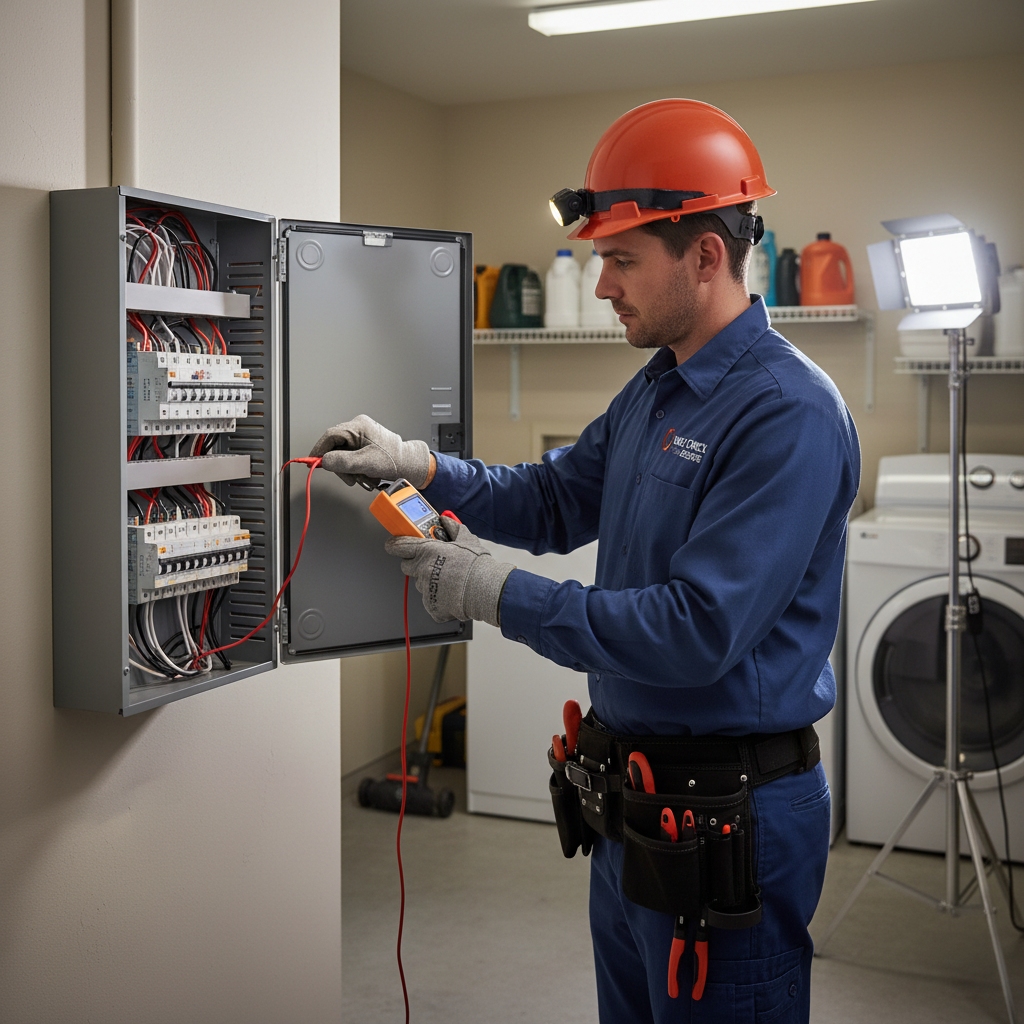
Your electrical panel (also called a breaker box, load center, or service panel) is the brain of your home's electrical system. It receives power from the utility and distributes it to every circuit in your house — lights, outlets, appliances, and HVAC. When your panel can't handle your home's electrical load, it becomes a safety hazard, not just an inconvenience.
An electrical panel upgrade means replacing your existing panel with a new one rated for higher amperage, better safety standards, or both. The most common upgrade in Winston-Salem is replacing an outdated or undersized 100-amp panel with a modern 200-amp panel — the current standard for most homes.
7 Signs You Need a Panel Upgrade
1. Circuit breakers trip constantly. If you're resetting breakers regularly — especially under normal household use — your panel is telling you it's overloaded. A breaker that trips on a circuit you haven't changed means the circuit is undersized or the panel is at capacity. Don't keep resetting it. Have it assessed.
2. Lights flicker or dim when appliances run. When your HVAC kicks on, your dishwasher starts, or your dryer fires up, do your lights dim? That's voltage sag — your panel struggling to distribute power evenly. It stresses appliances, damages electronics, and signals a real capacity problem.
3. You smell burning near the panel. This is a serious emergency. An acrid burning smell — like melting plastic or hot wiring — near your electrical panel means components are overheating. Turn off your main breaker if safe and call an electrician immediately. This can precede an electrical fire.
4. Your home has a Federal Pacific or Zinsco panel. These panels were common in homes built from the 1950s through the 1980s in Winston-Salem neighborhoods like West End, Ardmore, Buena Vista, and Washington Park. Both brands have well-documented failure modes: breakers that don't trip during overloads, creating a direct fire hazard. Many NC insurance companies refuse to write policies for homes with these panels. If your panel door says "FPE," "Stab-Lok," or "Zinsco," replacement is urgent — not optional.
5. Your home is more than 30 years old without a panel upgrade. Panels are designed to last 25–40 years. A 35-year-old panel has reached the end of its serviceable life, even if nothing visible is wrong. Modern homes consume far more electricity than homes built in the 1980s and 1990s.
6. You want to add an EV charger, hot tub, or major appliance. A Level 2 EV charger requires a dedicated 40–60 amp circuit. A hot tub requires 40–50 amps. A tankless water heater requires 80–100+ amps. Before purchasing any of these, have your panel assessed to confirm it has capacity — or budget for an upgrade as part of the project.
7. You're adding a room addition or ADU. New circuits for new space draw from your panel's available capacity. Most older panels can't absorb the additional load without upgrades.
100-Amp vs. 200-Amp vs. 400-Amp: Which Panel Is Right for Your Home?
Panel size is measured in amperage — the total electrical load the panel can safely handle simultaneously. Here's how to think about each level.
100-Amp Service
Standard in homes built before 1980. Adequate for the electrical demands of that era — central heat, a few appliances, and modest lighting. Completely inadequate for a modern home with central air conditioning, electric water heater, multiple high-draw appliances, home office equipment, and any plans for EV charging. If your home still has 100-amp service, it should be upgraded.
200-Amp Service
The current standard for most single-family homes. Handles central HVAC, electric appliances, modern lighting, and a Level 2 EV charger (with a dedicated circuit). The right choice for most Winston-Salem homeowners upgrading from 100 amps. Cost-effective, widely supported, and future-ready for most residential needs.
400-Amp Service
Used in large homes (3,500+ square feet), homes with electric heating, multiple EV chargers, or homes with significant workshop or outbuilding electrical needs. Also used when a home has two separate 200-amp panels (2 × 200A = 400A). Significantly more expensive — appropriate only when your electrical load genuinely requires it. Your electrician will perform a load calculation to determine whether 400-amp service is warranted.
Average Cost Breakdown for Panel Upgrades in Forsyth County, NC (2026)
Panel upgrade costs in the Winston-Salem and Forsyth County area vary based on the scope of work. Here's what to expect in 2026:
100A to 200A upgrade (most common residential job): $1,500–$2,500
This includes labor, new panel hardware, breakers, and permit/inspection coordination. This range covers a straightforward swap — same location, no service entrance changes needed.
200A panel replacement (same size, aging panel): $1,200–$2,000
Replacing a failed or dangerous panel with a new one of the same capacity. Common for Federal Pacific and Zinsco replacements.
FPE or Zinsco panel replacement: $1,800–$3,000
Slightly higher than a standard replacement due to the additional care required in safely disconnecting and removing these problematic panels.
100A to 400A upgrade: $3,500–$5,500+
Requires utility coordination for service entrance upgrade and is more labor-intensive.
Meter base / service entrance upgrade (if needed): Add $500–$1,500
If the service entrance cable or meter base is old or undersized, it must be upgraded alongside the panel. This requires Duke Energy coordination and is common in homes with original 1970s–1980s infrastructure.
What's always included: Labor, new panel and breakers, Forsyth County permit, inspection coordination, and reconnection testing. Written estimates before any work begins.
What Affects Your Final Price?
Location of the panel: Panels in accessible utility rooms cost less than panels in tight crawl spaces or unusual locations.
Service entrance condition: Worn or undersized service entrance wiring adds cost.
Age of wiring: If circuits need updating at the panel connection, labor increases.
Additions requested at the same time: Surge protection, AFCI breakers, or additional circuits add to the total but are typically cost-effective to bundle.
The Permit and Inspection Process in Winston-Salem (Forsyth County)
Electrical panel upgrades in Winston-Salem and Forsyth County are regulated work — permits are required, and final inspection by the county building department is mandatory. Here's how the process works when you hire Dausman Electric:
Step 1: Permit Application. Dausman Electric submits the permit application to Forsyth County Inspections on your behalf. Permit issuance typically takes 1–3 business days. The permit fee is typically $150–$250 and is included in your written estimate.
Step 2: Duke Energy Coordination. Duke Energy must temporarily disconnect your home from the utility grid for the panel installation. Dausman Electric coordinates this directly with Duke. Disconnection typically happens first thing in the morning on the day of installation.
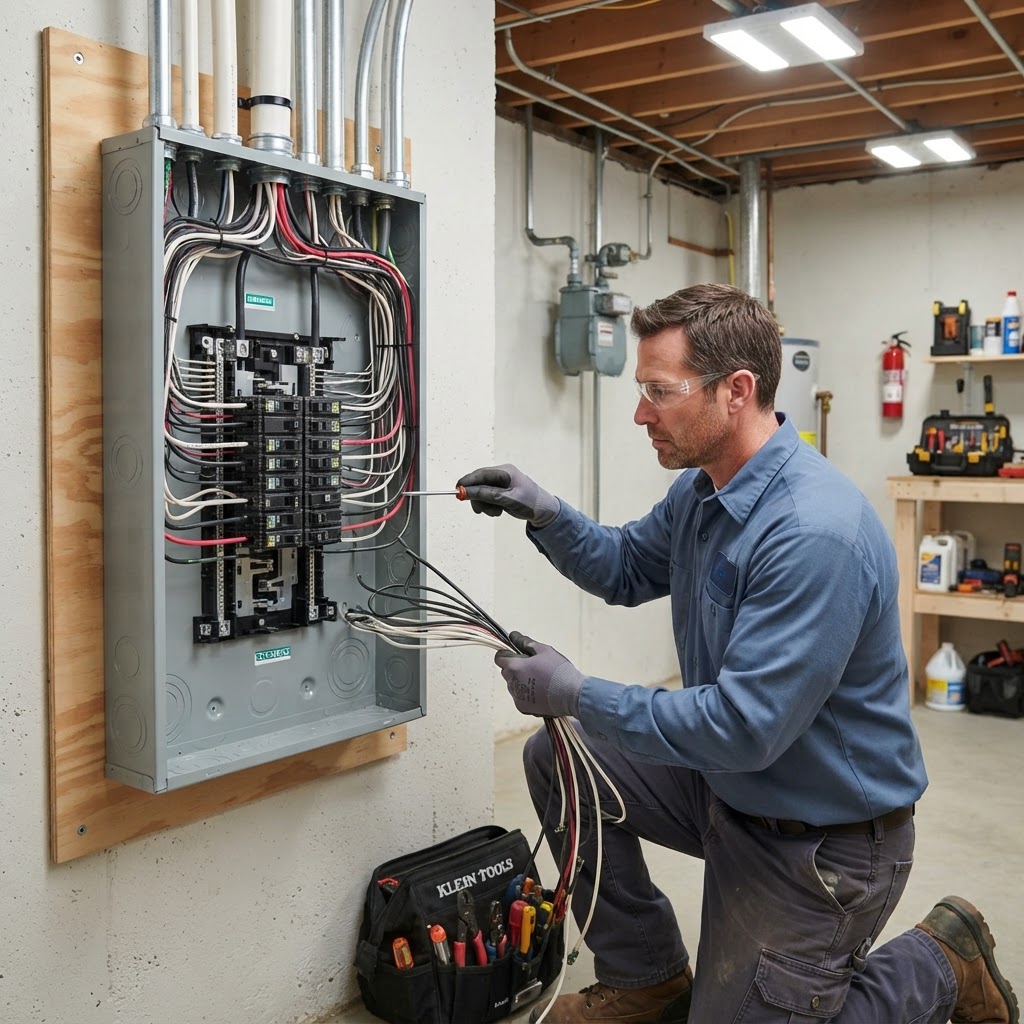
Step 3: Panel Removal and Installation. Your electrician removes the old panel, installs the new panel, reconnects all circuits, labels the breaker directory, installs arc-fault (AFCI) and ground-fault (GFCI) breakers where required by current NC code, and tests all circuits before restoration.
Step 4: Duke Energy Reconnection. Once the installation is complete and verified, Duke Energy reconnects service. This typically happens the same day. In some cases, reconnection may occur the following morning.
Step 5: Final Inspection. Forsyth County building inspector performs a final inspection, typically same-day or next-day. The inspector verifies compliance with the NC Electrical Code. Work that doesn't pass inspection must be corrected and re-inspected.
Total project timeline: Most panel upgrades are completed in a single day. Power is off for typically 4–8 hours during installation. Forsyth County permits are usually issued within 1–3 business days of application, so the full process from first call to completed upgrade typically takes 5–10 business days.
How Dausman Electric Handles Panel Upgrades Start to Finish
We handle everything — you don't need to coordinate with Duke Energy, the county building department, or figure out what permit to pull. Here's our process:
Free Assessment: We start with a free electrical safety inspection for new customers. We evaluate your current panel, assess your electrical load, identify any immediate safety concerns, and discuss your current and future electrical needs (EV charger? Generator? Major appliance additions?).
Written Estimate: You receive a detailed written estimate covering all labor, materials, permit fees, and inspection coordination. No surprises when the project is complete.
Permit and Scheduling: We pull the Forsyth County permit, coordinate your Duke Energy disconnection, and schedule your installation date — typically within 1–2 weeks.
Installation Day: Our licensed electrician arrives on time, performs the full panel upgrade, labels all circuits, tests all connections, and confirms your home has power before leaving. We clean up after the job.
Inspection: We coordinate the Forsyth County building inspection. We're there for the inspection and address any items the inspector flags immediately.
Follow-Up: After the project is complete, we remain available for any questions. Our work is warranted, and we stand behind it.
Frequently Asked Questions About Panel Upgrades
How long does a panel upgrade take?
Most residential panel upgrades are completed in a single workday. Your power will be off for approximately 4–8 hours during the installation. We'll give you a clear schedule in advance so you can plan accordingly.
How disruptive is it?
The main disruption is the power outage during installation. We recommend charging devices, filling any critical needs, and planning for 4–8 hours without power. We work efficiently to minimize downtime.
Do I need to be home during the upgrade?
You should be available at the start and end of the project. You don't need to be present for the entire installation, but we may need to ask questions and will need someone available to coordinate with Duke Energy on the reconnection.
Will a panel upgrade increase my home value?
Yes. An updated 200-amp panel is a significant home improvement. Buyers and their inspectors look for adequate panel capacity. An outdated or dangerous panel is routinely flagged as a defect in home sales — a modern panel eliminates that concern.
Is there any risk to my appliances during the upgrade?
A properly executed panel upgrade poses no risk to your appliances. We perform controlled disconnection and reconnection. Surge protection (optional, recommended) can be added at the same time to protect your appliances going forward.
What if I have a Federal Pacific or Zinsco panel?
Replace it as soon as possible. Don't wait for symptoms — breaker failure in these panels is not always preceded by visible warning signs. Dausman Electric handles FPE and Zinsco replacements regularly throughout Winston-Salem.
Ready for a Free Panel Assessment?
Dausman Electric is a licensed NC electrical contractor serving Winston-Salem, Forsyth County, Guilford County, and 6 additional counties across the Triad. We offer free safety inspections for new customers — including a thorough assessment of your panel's age, brand, capacity, and safety status.
If your panel needs upgrading, you'll receive a detailed written estimate before we touch anything. No pressure, no surprises.
📞 Call (336) 978-7844 — same-day and next-day appointments available.
🌐 Or schedule your free inspection online.
We also serve homeowners planning EV charger installations, home rewiring projects, and businesses needing commercial electrical services throughout the Winston-Salem area.