How Much Does an EV Charger Cost to Install in NC? (2026 Pricing Guide)
If you've bought an electric vehicle, you're probably wondering: what does it actually cost to install a Level 2 charger at home? The answer depends on several factors, but most North Carolina homeowners pay between $600 and $2,000 for a complete installation — charger included. If your home needs a panel upgrade first, the total runs $2,500–$4,500.
This guide breaks down every factor that affects your final price, so you know exactly what to expect before you call an electrician.
Average EV Charger Installation Costs in NC (2026)
Here's what Winston-Salem and Triad-area homeowners typically pay:
Basic installation (200-amp panel, garage, short circuit run): $400–$800 labor + materials
Complex installation (long circuit run, conduit, or outdoor mount): $600–$1,200
Panel upgrade required (100A → 200A) + charger installation: $2,000–$3,500
EV charger hardware: $200–$800
Forsyth County permit and inspection: $75–$150
Total project cost: $600–$2,000 for homes with an adequate panel; $2,500–$4,500 for homes requiring a panel upgrade.
What Factors Affect the Price?
1. Panel Capacity
This is the biggest variable. A Level 2 EV charger needs a dedicated 40–60 amp, 240V circuit. If your panel has available capacity and empty breaker slots, installation is straightforward. If your home has a 100-amp panel that's already near capacity, you'll need a panel upgrade first — adding $1,500–$2,500 to the project.
Many Winston-Salem homes built before 1990 still have 100-amp service. Dausman Electric performs a load calculation during your free assessment to determine whether your panel can support an EV charger.
2. Distance From Panel to Charging Location
The farther the circuit has to run, the more wire and labor are needed — and the higher the cost. If your electrical panel is in the garage and your EV parks 10 feet away, the circuit run is short and inexpensive. If your panel is on the opposite side of the house, the electrician needs to run wire through walls, attics, crawl spaces, or conduit — significantly increasing labor time and material costs.
Short circuit run (under 25 feet): $400–$600
Medium circuit run (25–75 feet): $500–$900
Long circuit run (75+ feet, or through finished space): $700–$1,200+
3. Charger Amperage
Higher-amperage chargers charge faster but require heavier wire and larger breakers. A 32-amp charger uses 8 AWG wire and a 40-amp breaker. A 48-amp charger requires 6 AWG wire and a 60-amp breaker — more expensive materials.
Most homeowners are fine with a 40-amp charger (adds ~25 miles of range per hour). If you drive long distances daily or have a vehicle with a large battery (like a Ford F-150 Lightning or Rivian), a 48-amp charger may be worth the extra cost.
4. Indoor vs Outdoor Installation
Garage installations are simplest and cheapest — protected from weather, near the panel, and where most EVs park. Outdoor installations (driveway or carport) require a weatherproof charger, additional weatherproofing of connections, and possibly a mounting post — adding $100–$300.
5. Hardwired vs NEMA 14-50 Outlet
NEMA 14-50 outlet: Adds $50–$100 for the outlet hardware. Allows you to unplug and take the charger if you move.
Hardwired: No outlet cost. More weatherproof. Required for some high-amperage chargers. Slightly more permanent.
Both approaches are code-compliant. We'll recommend the best option for your setup.
6. Permit and Inspection Fees
EV charger installation requires an electrical permit in Forsyth County and throughout NC. Permit fees range from $75–$150 and are typically included in your written estimate. Dausman Electric handles all permitting and inspection coordination on your behalf.
7. Charger Brand and Features
The charger hardware itself ranges from $200 to $800 depending on brand, amperage, and smart features:
- Budget ($200–$300): Grizzl-E Classic, Emporia — reliable, no-frills, weatherproof
- Mid-range ($300–$450): JuiceBox 40, ChargePoint Home Flex — WiFi, app control, energy monitoring
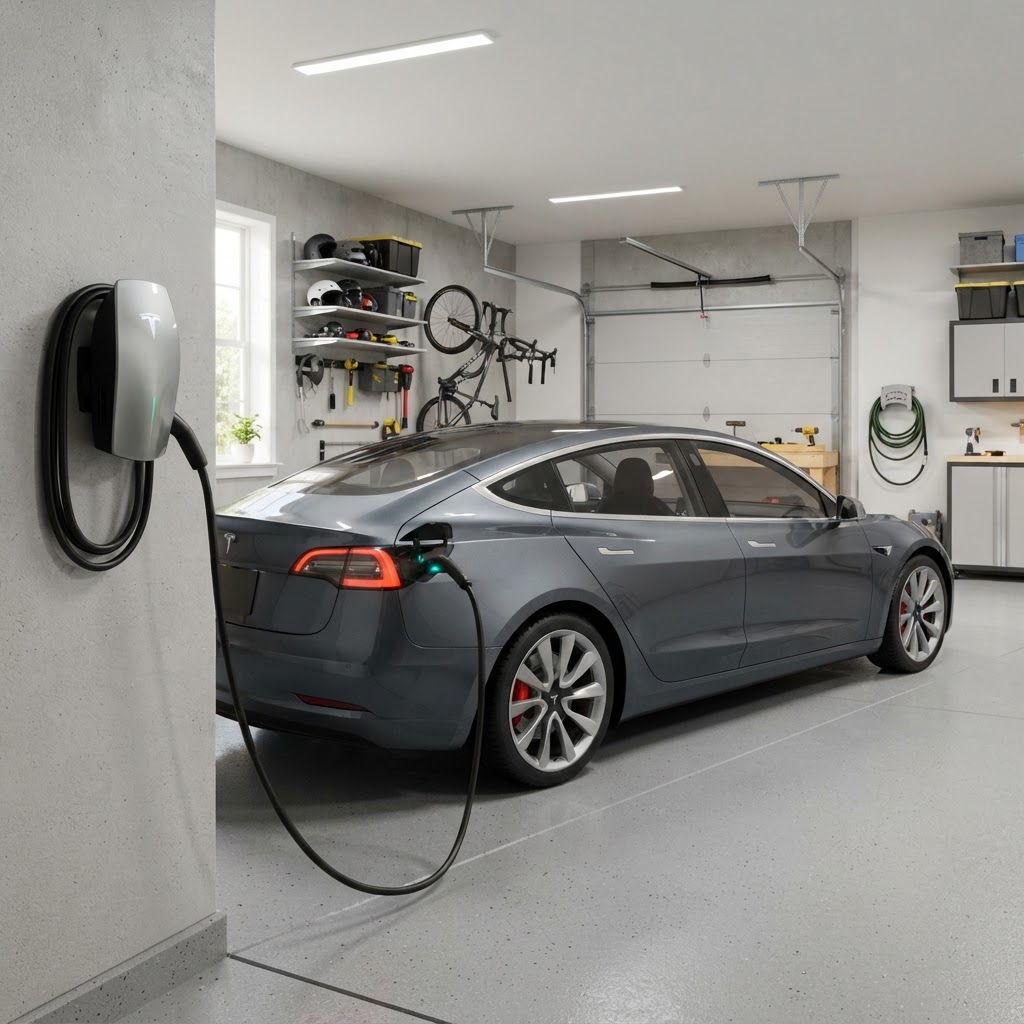
- Premium ($400–$800): Tesla Wall Connector, Wallbox Pulsar Plus — vehicle integration, load sharing, high amperage
You don't need the most expensive charger. A $200 Grizzl-E charges just as fast as a $450 ChargePoint for most vehicles. The premium price buys smart features and app integration — not faster charging.
DIY vs Professional Installation: Why You Need a Licensed Electrician
Installing a 240V, 40–60 amp circuit is not a DIY project. Here's why:
Safety: A 50-amp circuit carries enough current to cause fatal electrocution or start a fire if improperly installed. Professional electricians follow strict safety protocols and code requirements.
Code compliance: NC electrical code specifies wire gauge, breaker sizing, GFCI protection, grounding, and placement requirements. Non-compliant installations fail inspection and create liability.
Permits and insurance: Unpermitted electrical work can void your homeowner's insurance. If an improperly installed charger causes a fire, your insurance company may deny the claim. Permitted work, inspected and approved, protects you and your home.
Warranty: Licensed electricians stand behind their work with warranty coverage. DIY installation has no warranty and no recourse if something goes wrong.
Vehicle warranty: Some EV manufacturers require professional installation with a permit on file to honor charging-related warranty claims. DIY installation may void portions of your vehicle's warranty.
How to Get the Federal EV Charger Tax Credit
The Alternative Fuel Vehicle Refueling Property Credit (IRS Form 8911) allows you to claim 30% of the total cost of EV charger installation — including both equipment and labor — as a federal tax credit, up to $1,000.
What's covered:
- The EV charger hardware (EVSE unit)
- Labor and installation costs
- Permit fees
- Panel upgrade costs (if required specifically for the EV charger)
How to claim it:
- Save all receipts and invoices from your installation
- File IRS Form 8911 with your federal tax return
- Claim 30% of total cost, up to $1,000
For a $1,500 installation (charger + labor), that's a $450 tax credit. For a $3,500 panel upgrade + charger project, you'd claim the maximum $1,000 credit. Consult your tax professional for your specific situation.
How to Get an Accurate Quote
To get the most accurate EV charger installation quote, have the following information ready when you call:
- Your EV make and model — determines connector type and recommended amperage
- Your electrical panel location — garage, basement, utility room, or exterior
- Your panel's amperage rating — check the main breaker (100A, 150A, or 200A)
- Where you park your EV — garage, driveway, or carport
- Approximate distance from panel to charging location
- Whether you already have a charger or need a recommendation
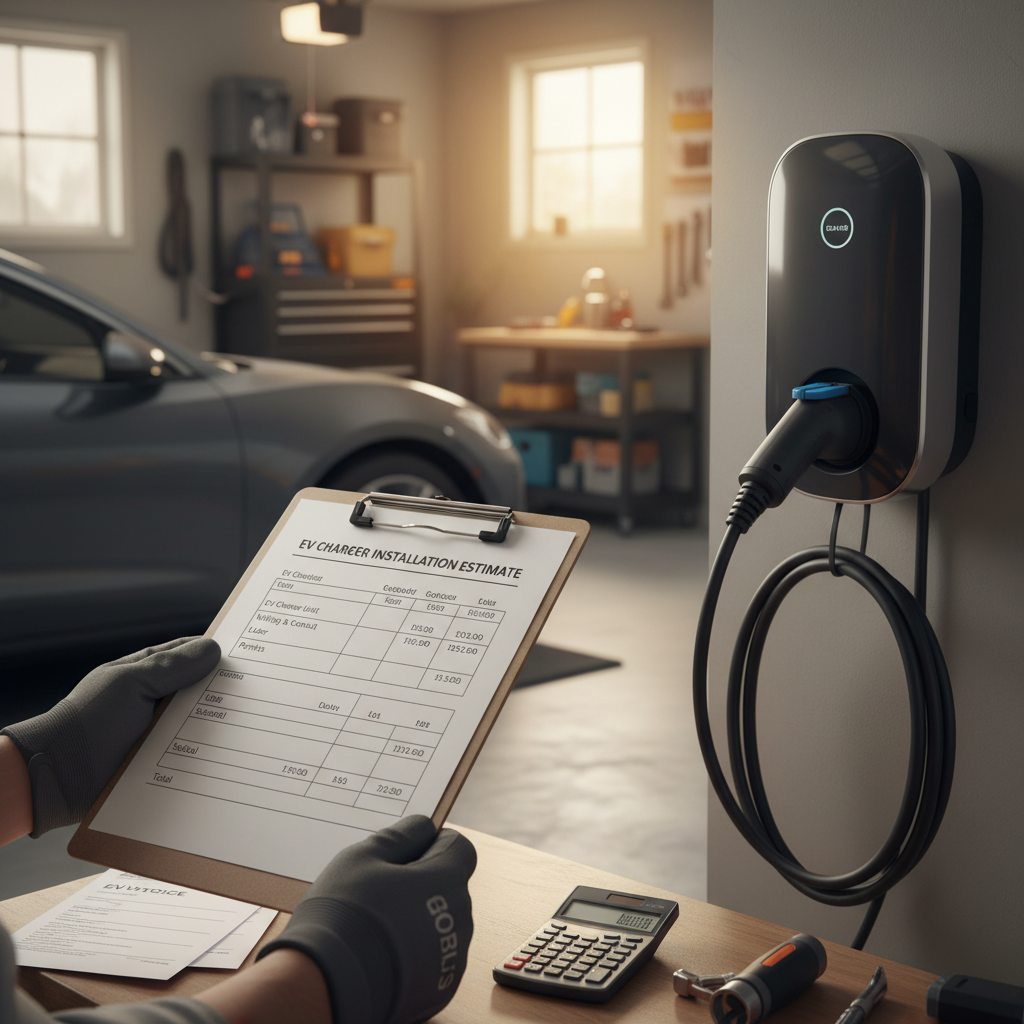
Dausman Electric offers free assessments where we evaluate all of these factors in person and provide a detailed written estimate.
Red Flags When Getting EV Charger Quotes
Quote without a site visit: A reputable electrician will want to see your panel and charging location before quoting. Verbal quotes over the phone are unreliable.
Significantly lower than other quotes: If one quote is dramatically cheaper, they may be cutting corners on wire gauge, skipping permits, or using unlicensed labor.
No mention of permits: Any electrician who says permits "aren't necessary" for EV charger installation is either uninformed or cutting corners. Permits are required by code.
No written estimate: Always get a written estimate before work begins. Verbal-only quotes leave you vulnerable to surprise charges.
Pressure to buy a specific charger: Some installers get kickbacks for pushing specific brands. A trustworthy electrician recommends based on your needs, not their commission.
Get a Free EV Charger Installation Quote
Dausman Electric provides free written estimates for EV charger installation throughout Winston-Salem, Forsyth County, Guilford County, and the Triad. We'll assess your panel, recommend the right charger for your vehicle, handle all permitting and inspection, and give you a clear written estimate before any work begins.
Call (336) 978-7844 or request a free assessment online. Same-day and next-day appointments are often available.
See also: Complete EV Charger Installation Guide | Panel Upgrade Guide | EV Charger Guide for NC