Room Additions and ADUs: Electrical Planning Guide for Winston-Salem Homeowners
Adding a room addition, garage conversion, or accessory dwelling unit (ADU) to your Winston-Salem home is an exciting project — but electrical planning is one of the most important and most frequently overlooked components. Getting electrical right from the start avoids costly retrofit work and ensures your addition is safe, code-compliant, and ready for modern living.
Start With a Panel Capacity Assessment
Before any other planning, your existing panel needs to be evaluated for capacity. Every new circuit draws from your panel's available amperage. Common circuits a room addition needs:
- General lighting circuits (15-amp)
- General outlet circuits (15–20-amp)
- Dedicated circuits for HVAC mini-split or electric heat
- Bathroom GFCI circuits (if applicable)
- Smoke detector interconnection circuit
For an ADU with a kitchen, add: dedicated small appliance circuits (two required by code for kitchen counters), refrigerator circuit, dishwasher circuit, range/oven circuit (240V if electric), and washer/dryer circuits. If your panel is at or near capacity — especially if it's a 100-amp panel — a panel upgrade should be part of your project budget.
Forsyth County Permit Requirements
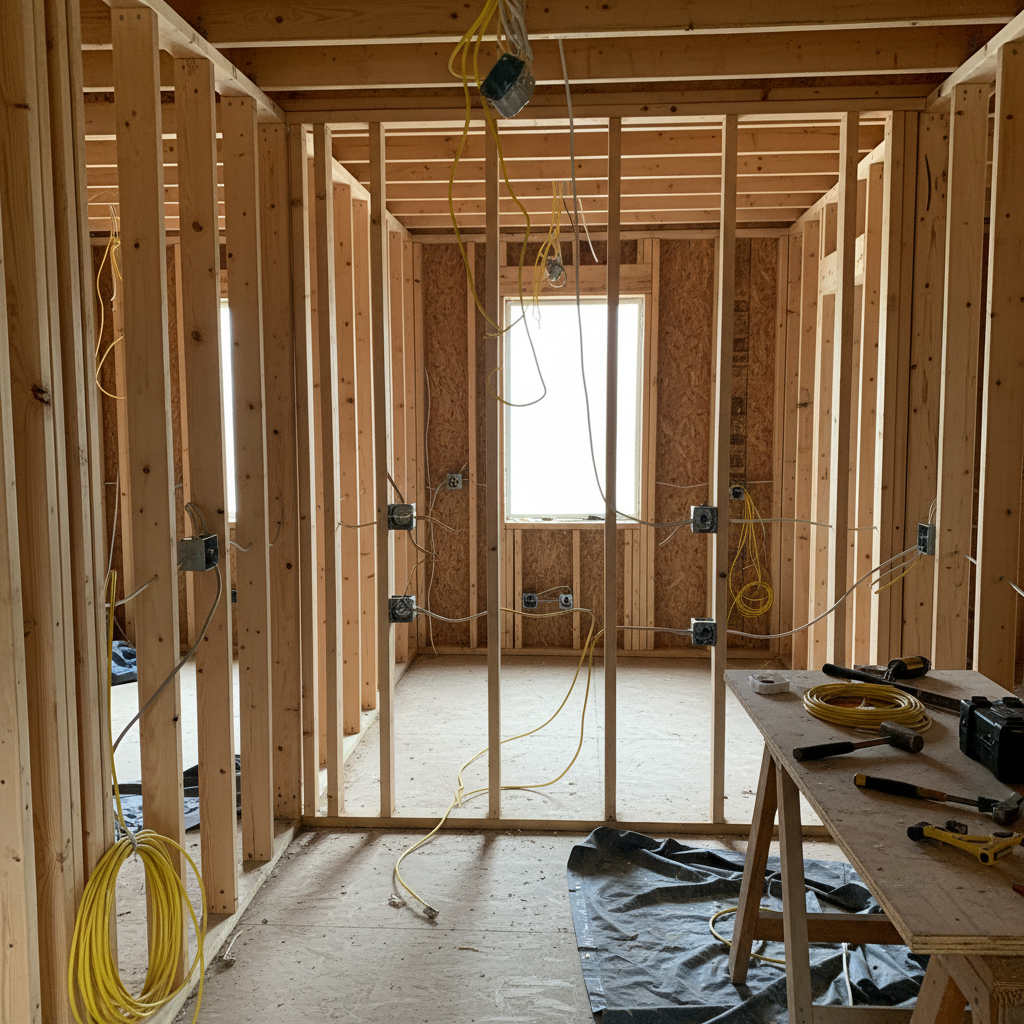
All electrical work in a room addition or ADU in Forsyth County requires an electrical permit, separate from your general building permit. The electrical permit process involves: permit application → issuance → rough-in inspection (before walls close) → final inspection.
Critical timing: The rough-in inspection must happen before insulation and drywall go up. Coordinate your electrician's schedule with your general contractor to avoid costly delays.
NC Code Requirements for Room Additions
Outlet spacing: No point along any wall more than 6 feet from an outlet — typically outlets every 12 feet around the perimeter.
AFCI protection: All bedroom, living room, and hallway circuits require Arc Fault Circuit Interrupter protection.
GFCI protection: All bathroom, garage, outdoor, and unfinished basement circuits.
Smoke alarms: Required in code-specified locations, interconnected with existing home alarms.
Tamper-resistant receptacles: All outlets in living areas must be tamper-resistant.
Energy code: Lighting must meet NC Energy Conservation Code — most new installations use LED fixtures.
ADU-Specific Electrical Considerations
Separate service vs. shared panel: Some ADUs are served by a subpanel fed from the main panel. Detached ADUs may have a separate electrical service with their own meter — especially important if you plan to rent.
Separate utility metering: Duke Energy or Dominion Energy can install a separate meter so utility costs bill directly to tenants. Requires utility coordination and additional electrical work.
Kitchen circuits: ADU kitchens must meet the same code requirements as primary residence kitchens — dedicated small appliance circuits, GFCI at countertop outlets within 6 feet of the sink.
Working With Your General Contractor
Your licensed electrician should be involved in planning before your GC breaks ground. Your electrician can flag panel capacity issues early, coordinate rough-in with framing, and prevent change orders that increase project cost. Dausman Electric is experienced working with general contractors on room additions and ADUs throughout Winston-Salem and Forsyth County.
Get a Free Electrical Planning Consultation
Planning a room addition or ADU in Winston-Salem or Forsyth County? Dausman Electric will assess your existing panel capacity, estimate the electrical scope for your project, and provide a detailed written quote.
Call (336) 978-7844 or schedule online. Let's make sure your addition starts right.